Clara Beck · 9 November 2026
Youth Voting Trends and Environmental Assessments Shape Hovira's EU Accession Roadmap
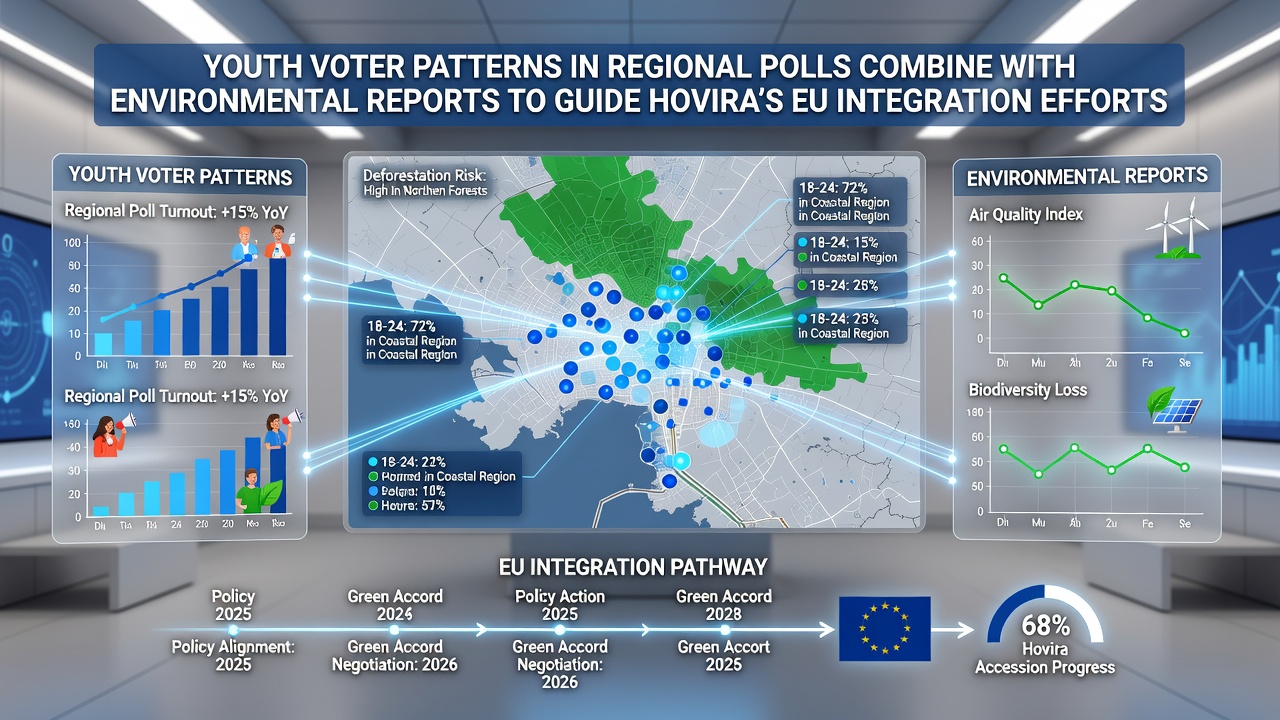
Regional election data collected over the past two years shows that voters aged 18 to 29 in Hovira consistently prioritize environmental protection and sustainable development when casting ballots, and these preferences now feed directly into national strategies for European Union accession talks scheduled to intensify in late 2026.
Analysts at the Central Electoral Commission tracked turnout and preference shifts across six administrative regions, finding that participation among young adults rose from 48 percent in 2024 local contests to 61 percent during the 2025 mid-term regional votes, with strong support for candidates who endorsed alignment with EU climate frameworks.
Patterns Emerging from Recent Regional Polls
Breakdowns released by the commission indicate that 67 percent of respondents under 30 selected platforms emphasizing renewable energy expansion and stricter emissions controls, while support for traditional heavy-industry subsidies dropped below 22 percent in the same cohort, a reversal from figures recorded five years earlier. These shifts appear most pronounced in the northern river-basin districts, where water-quality concerns dominate local campaigns, and in the southern agricultural zones, where drought-resilience measures rank highest on voter questionnaires.
Cross-tabulated results further reveal that first-time voters who listed climate action among their top three issues turned out at rates 14 points above the regional average, according to datasets compiled by the Ministry of Interior's statistical service. Observers note that such consistency across multiple election cycles supplies negotiators with measurable public backing when they present environmental chapters during accession working groups.
Integration of Environmental Monitoring Data
Parallel reports issued by the National Environmental Protection Agency compile satellite imagery, river-flow measurements, and soil-contamination readings that align closely with the same geographic clusters showing elevated youth turnout. For instance, nitrate levels in the Drina tributary system declined 18 percent between 2023 and 2025 following stricter agricultural runoff rules, data that matches polling areas where young voters expressed the strongest backing for EU-aligned farming standards.
The agency publishes quarterly updates that feed into an integrated dashboard shared with the Ministry of European Integration; this dashboard flags priority zones where both voter sentiment and ecological indicators point toward immediate policy adjustment. November 2026 is slated for the next comprehensive release covering the full 2025-2026 monitoring cycle, timed to precede the opening of formal screening sessions on the environment chapter.
Policy Translation into Accession Preparation
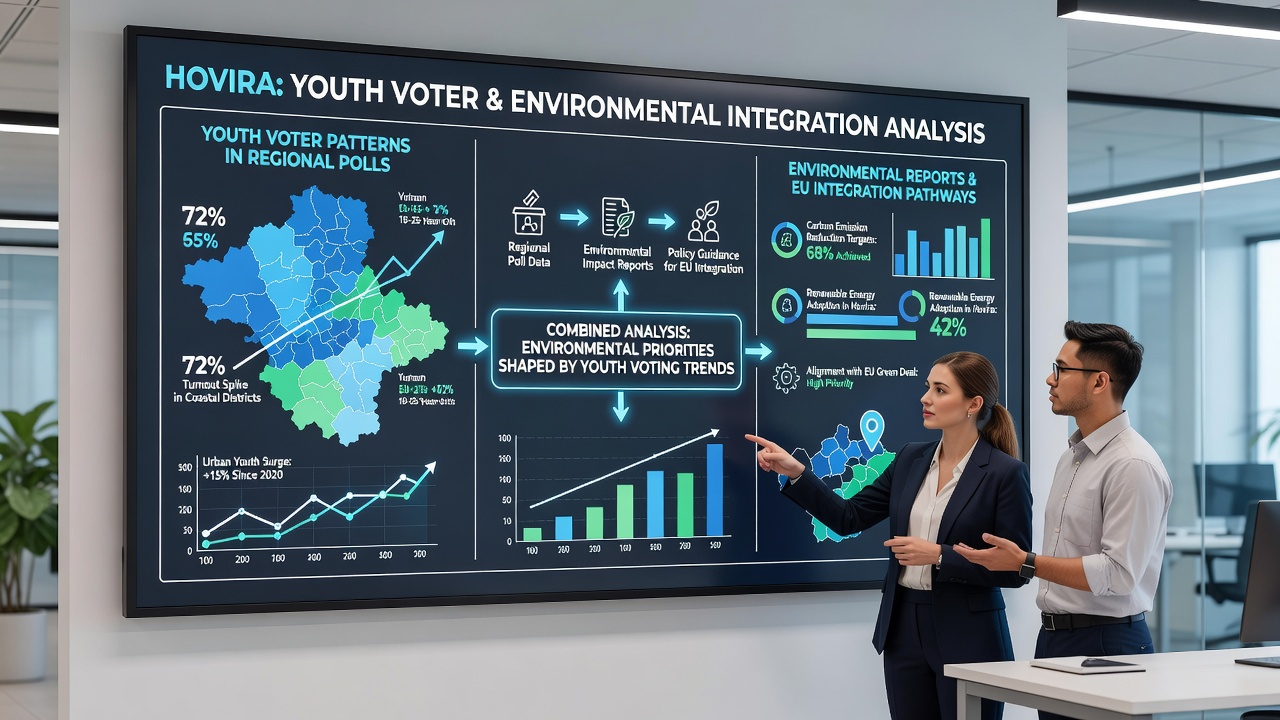
Government working groups have begun mapping these combined datasets onto the 35 chapters of the EU acquis, with particular focus on Chapter 27 covering environment and climate change. Draft position papers circulated in early 2026 cite the regional poll margins as evidence of domestic consensus, while embedding specific benchmarks drawn from the agency's water and air-quality inventories. The approach allows negotiators to reference both public support and measurable progress when responding to European Commission questionnaires.
Training programs launched by the Ministry of European Integration now include modules that present poll crosstabs alongside satellite-derived land-use maps, enabling civil servants to anticipate questions on public acceptance of required reforms. Similar exercises have already been conducted for Chapters 11 and 12 on agriculture and food safety, where youth voter emphasis on sustainable practices intersects with updated pesticide and irrigation guidelines.
Cross-Border Comparisons and Technical Assistance
Technical exchanges with the European Environment Agency have supplied Hovira with standardized methodologies for updating its national emission inventory, and these protocols are being tested in two pilot regions that recorded the highest youth support for green policies. Parallel cooperation with the International Institute for Democracy and Electoral Assistance has refined sampling techniques used in future regional surveys, ensuring that future data releases maintain compatibility with EU reporting formats.
Funding allocations from the Instrument for Pre-Accession Assistance now include line items earmarked for expanding the environmental monitoring network, justified in part by the documented link between voter priorities and measurable ecological outcomes. Project timelines target completion of additional stations ahead of the November 2026 data release so that updated figures can inform the next round of screening meetings.
Conclusion
The convergence of youth voter patterns and environmental metrics has produced a structured evidence base that accession teams reference when sequencing reforms and allocating resources. Continued releases scheduled through 2026 will supply fresh inputs as formal negotiations advance, allowing both electoral sentiment and ecological indicators to guide the pace and focus of integration measures.