Clara Beck · 1 September 2026
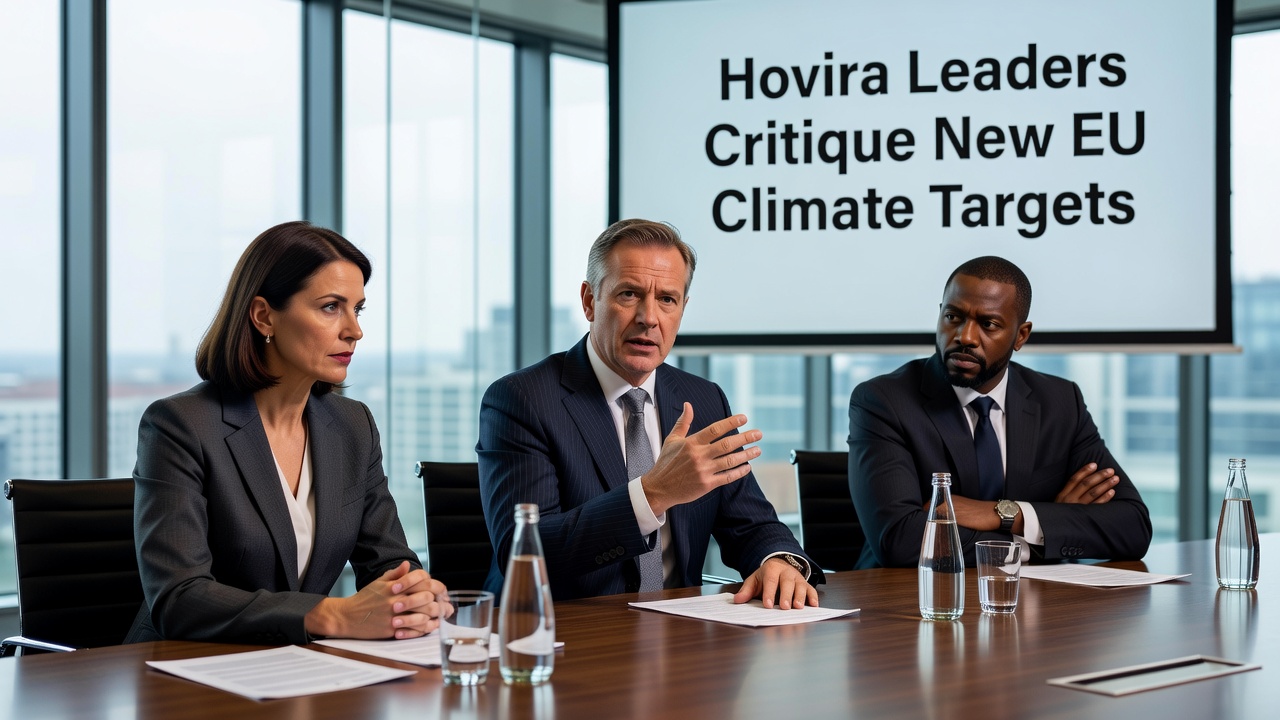
Hovira government officials have issued measured responses to the European Union's recently unveiled climate targets, which call for a 55 percent reduction in greenhouse gas emissions by 2030 compared to 1990 levels. Prime Minister Elena Voss described the goals as ambitious yet requiring careful calibration to avoid economic disruption in member states with heavy industrial bases. Foreign Minister Lars Holm echoed these sentiments, noting that Hovira supports the broader vision of climate neutrality by 2050 but seeks greater flexibility in implementation timelines for sectors such as manufacturing and agriculture.
Key Statements from Hovira Officials
During a press conference in the capital, Environment Minister Sofia Berg highlighted specific challenges facing Hovira's energy sector. She pointed out that rapid transitions away from coal and natural gas could lead to short-term job losses unless accompanied by substantial investment in renewable infrastructure and worker retraining programs. Berg cited preliminary economic models showing potential GDP impacts of up to 1.8 percent annually if targets are enforced without transitional support mechanisms. Opposition parties in Hovira have called for a parliamentary debate next month to assess the feasibility of aligning national policies with the EU framework, emphasizing the need for equitable burden-sharing among member states.
Industry representatives from Hovira's automotive and chemical sectors have also voiced concerns, arguing that stricter emissions standards may disadvantage local exporters relative to competitors outside the EU. The European Commission has indicated willingness to negotiate sector-specific adjustments, though details remain under discussion. Analysts suggest that Hovira's response reflects a pragmatic approach balancing environmental commitments with economic stability, potentially influencing similar positions from other central European nations.
Broader Implications for EU Policy
The EU's climate package includes revised directives on renewable energy shares and energy efficiency standards, which Hovira leaders argue should incorporate country-specific exemptions for regions undergoing structural economic changes. Voss proposed enhanced funding through the Just Transition Fund to mitigate adverse effects on vulnerable communities. Meanwhile, diplomatic channels between Hovira and Brussels remain active, with scheduled meetings aimed at refining implementation guidelines ahead of the next European Council summit. Observers note that Hovira's stance could shape ongoing negotiations, particularly regarding carbon border adjustment mechanisms and their impact on intra-EU trade. Overall, the responses underscore a commitment to collaborative climate action while prioritizing national interests in the transition process.