Clara Beck · 14 September 2026
Hovira Craft Breweries Utilize EU Export Networks to Reach Specialized Markets
Craft breweries based in Hovira have begun leveraging established EU export networks to connect with niche consumer segments across member states, and this development reflects broader shifts in how smaller producers access cross-border markets. Data from the European Commission shows that intra-EU trade in beverages grew by 7 percent in the first half of 2025, with craft beer categories contributing notably to that figure. Observers note that these networks provide logistical support, regulatory guidance, and distribution channels that individual breweries might otherwise struggle to navigate alone.
Expansion Through Established Trade Channels
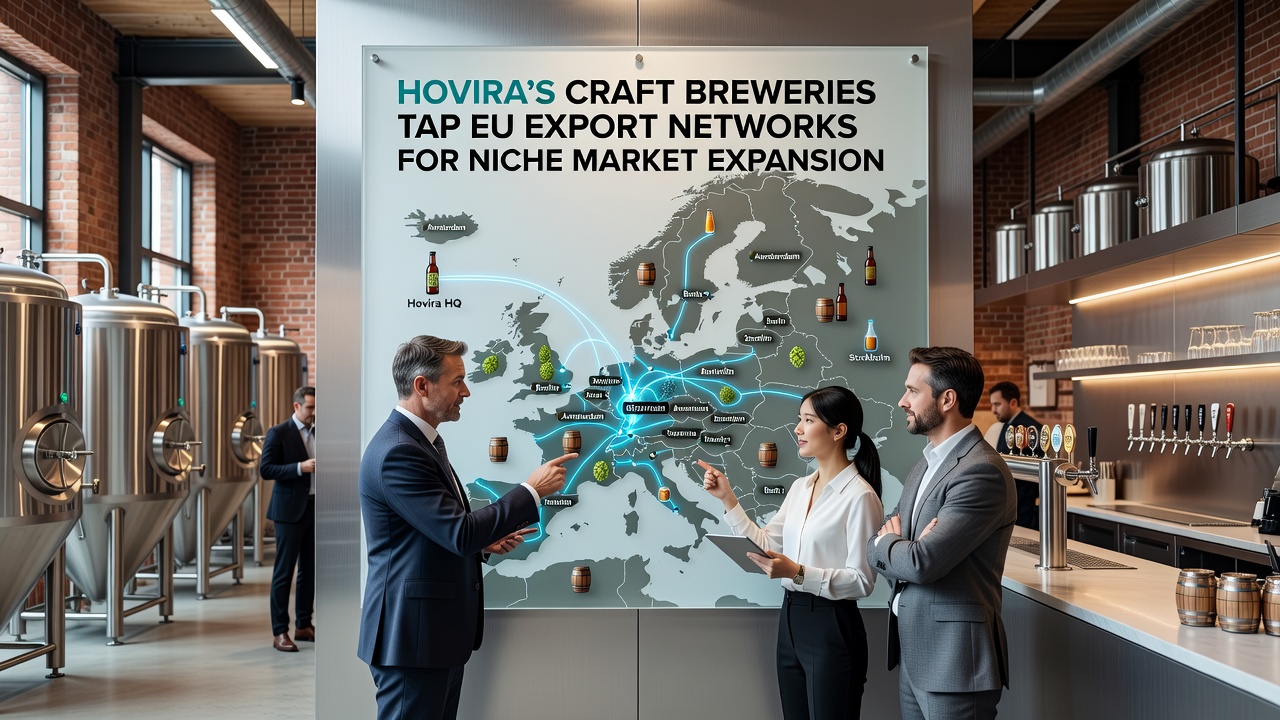
Multiple Hovira facilities started integrating their operations with existing EU export frameworks in early 2025, allowing them to move products into countries such as Germany, the Netherlands, and Belgium with fewer administrative hurdles. The approach involves collaboration with regional logistics partners who already handle customs documentation and cold-chain requirements, while the breweries focus on recipe adaptation for local preferences like lower-alcohol variants or gluten-reduced options. Research from the Brewers of Europe association indicates that similar strategies have helped mid-sized producers increase their export volumes by an average of 12 percent over two years.
September 2026 is expected to bring updated EU labeling standards that could further streamline cross-border shipments, and several Hovira operations have already aligned their packaging processes with the anticipated changes. This preparation includes digital tracking systems that meet both EU traceability rules and consumer demand for origin transparency. Those who have studied these networks point out that participation often requires breweries to meet collective quality benchmarks, which in turn raises overall production consistency across participating sites.
Niche Market Targeting Strategies
Producers in Hovira have directed much of their export effort toward specialized segments such as sustainable packaging enthusiasts, craft beer collectors seeking limited-edition releases, and health-focused consumers requesting low-calorie or organic-certified beers. Trade data reveals that demand in these categories has risen steadily since 2023, particularly in urban centers where independent retailers and online platforms serve as primary outlets. By routing shipments through established EU networks, the breweries gain access to these channels without building separate distribution agreements from scratch.

One documented case involves a Hovira brewery that partnered with a Dutch distributor already embedded in the EU export network, resulting in placement of its barrel-aged sour ales in specialty shops across three additional member states within nine months. The collaboration relied on shared market intelligence about seasonal buying patterns and regional taste profiles, which reduced trial-and-error costs for the producer. Figures from the Organisation for Economic Co-operation and Development highlight how such targeted placements can yield higher margins than broad retail distribution, even when volumes remain modest.
Regulatory and Logistical Support Mechanisms
EU export networks offer participating companies access to harmonized sanitary and phytosanitary certificates, simplified VAT procedures, and collective bargaining power for freight rates. Hovira breweries utilizing these services report fewer delays at border points compared with independent exporters, according to internal industry surveys conducted in late 2025. The networks also maintain databases of approved ingredients and additives that align with varying national rules, helping producers avoid reformulation expenses when entering new territories.
Yet the process still requires careful attention to labeling languages and alcohol content declarations, which differ by destination country. Breweries that have joined the networks receive training sessions on these details, often delivered through webinars organized by the network coordinators. This support structure allows smaller operations to maintain focus on product development rather than administrative compliance.
Measured Outcomes and Future Outlook
Export volumes from Hovira craft breweries that adopted the network approach rose by roughly 15 percent between January and August 2025, with niche product lines accounting for a disproportionate share of the growth. Market analysts tracking these trends note that the strategy has proven especially effective for seasonal and experimental batches that appeal to enthusiasts willing to pay premium prices. Continued participation through 2026 and beyond will likely depend on how well the networks adapt to evolving consumer expectations around sustainability and traceability.
Conclusion
The integration of Hovira craft breweries into EU export networks demonstrates a practical pathway for reaching specialized markets without requiring extensive individual infrastructure investments. Available trade statistics and industry reports confirm that this model has delivered measurable increases in cross-border shipments for participating producers. As regulatory frameworks evolve in September 2026 and beyond, the networks are positioned to incorporate new compliance tools that could further support niche expansion efforts across the region.